

Confused between roll-offs and tear-offs for your next mud ride? This guide breaks down both goggle systems with real-world pros, cons, and recommendations so you never ride blind.
When you’re ripping through a deep rut or pinning it across a wet trail, there’s one thing you absolutely can’t afford to lose: clear vision. Mud doesn’t just make the ride unpredictable, it covers your goggles, clogs your line of sight, and can turn an aggressive pass into a blind gamble. In these moments, the right goggle system can make the difference between staying in control and flying blind.
Enter the two titans of vision control in off-road sports: roll-offs and tear-offs. Both are designed to help riders wipe away the chaos mid-ride, but they approach the problem in radically different ways. Whether you’re racing motocross or trail riding, choosing the right system can elevate your performance and protect your ride.
Looking for brand-specific options? Check out top-tier goggles from:
So, which one holds up better when the mud starts flying? That’s what we’re here to answer.
How They Work: A Quick Primer
Before we pit them head-to-head, let’s break down how each system actually functions.
Roll-Off System
A roll-off goggle uses a transparent film strip housed in two side canisters, one feeds, one collects. When mud hits your lens, you simply pull the attached string, and the film advances across your field of view, instantly clearing away the grime. This system lets you refresh your vision on the fly, dozens of times, without ever needing to stop your ride.

Tear-Off System
Tear-offs are stackable, ultra-thin plastic sheets layered directly on top of your goggle lens. Each sheet acts as a sacrificial layer. When the top sheet gets splattered, you peel it off in one quick motion to reveal a clean one underneath. Once you’re out of layers, that’s it, you’ll need to stop and reload.
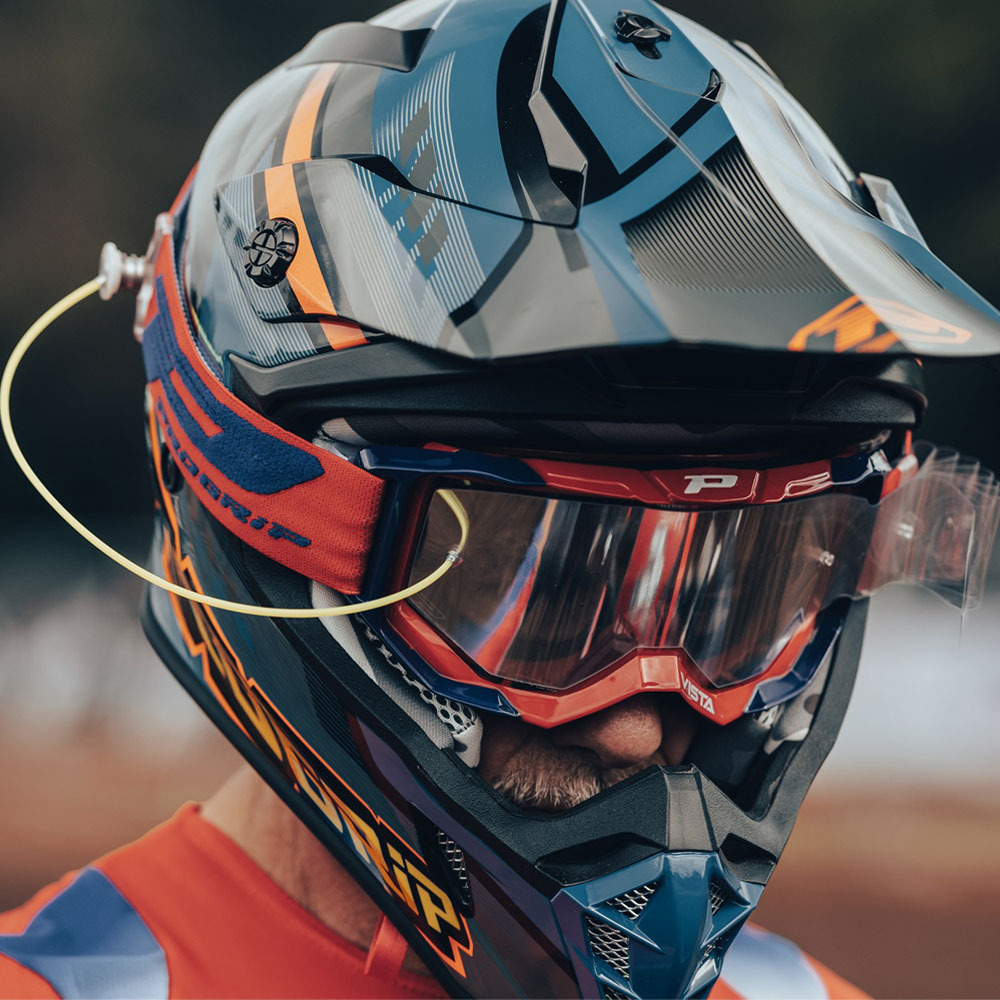
Roll-Off Goggle Systems
a. How Roll-Offs Function
Roll-off systems rely on a thin, transparent film housed in two canisters mounted on either side of your goggles. One canister feeds the film across your lens, while the other collects it after use. When mud splashes across your view, a quick tug on the attached string slides a clean section of film into place; no stopping, no delay. This process can be repeated 20, 30, even 40 times in a single ride, depending on the roll size.
b. Pros of Roll-Offs
-
Built for the Slop: If your ride regularly turns into a mud bath, roll-offs are your best friend. They’re designed for constant clearing, perfect for wet, messy terrain.
-
Clarity that Lasts: Because the film rolls flat across the lens without stacking, you avoid the light distortion that happens with layered tear-offs.
-
Cleaner Trails, Clearer Conscience: Used film is wound into the canister, so nothing gets discarded mid-ride. This matters on trails where littering isn’t just frowned upon, it’s banned.
-
Upgraded Tech: Today’s roll-off systems use wider films, reaching up to 50mm, which provide a broader field of vision and improved lens coverage. Upgraded seals and materials also help minimize fogging and prevent water from seeping in.
c. Cons of Roll-Offs
-
Fiddly to Set Up: Roll-offs are not plug and play. If the film is not aligned properly or the system is not sealed tightly, water and debris can slip in and make the setup useless when you need it most.
-
Mechanical Mayhem: Film jams, broken cords, or loose canister lids can ruin your ride if the system fails mid-race. Maintenance matters.
-
Added Bulk: Those side-mounted canisters stick out. While they don’t weigh much, some riders find the extra profile awkward or annoying on tighter helmets.
Tear-Off Goggle Systems

a. How Tear-Offs Function
Tear-offs are thin plastic sheets stacked directly on the outside of your goggle lens. Each sheet covers the full lens and is peeled off manually when it becomes obstructed. With one swift motion, you remove the top layer to reveal a clean, clear view. Most riders stack 5 to 10 sheets before a race, with some going up to 15 in ideal conditions.
b. Pros of Tear-Offs
-
Instant Reset: One pull and your vision is restored, no waiting for a roll to advance. In high-speed moments, that second saved can count.
-
Light and Sleek: Tear-off stacks don’t alter the shape or weight of your goggles, making them a favorite for riders who value minimal gear.
-
Perfect for Short, Clean Runs: In dry or lightly muddy conditions, tear-offs are more than enough to keep your view clear from gate drop to checkered flag.
c. Cons of Tear-Offs
-
Limited Ammunition: Once you’ve pulled your last tear-off, that’s it. If the mud keeps coming, you’re out of options until you stop.
-
Double Pull Disaster: It’s easy to grab more than one layer in the heat of a ride, accidentally wasting clears or running out too soon.
-
Trail Trash: Used tear-offs hit the ground, and many trails, tracks, and events have banned them outright for environmental reasons.
-
Not Built for a Mud Gauntlet: In sloppy conditions, 5–10 tear-offs disappear fast, leaving you exposed just when things get messy.

Head-to-Head Comparison
Quick Reference Table
|
Feature |
Roll-Off System |
Tear-Off System |
|---|---|---|
|
Best For |
Prolonged muddy rides, wet races, trail riding |
Shorter races, drier tracks, controlled conditions |
|
Vision Clears |
20–30+ pulls per roll, consistent visibility |
5–15 sheets max, clarity fades with each layer |
|
Clarity Quality |
One smooth film layer, no distortion |
Stacked layers can distort or fog over time |
|
Installation |
Requires precise setup, possible jams |
Quick and easy, low risk of malfunction |
|
Weight/Bulk |
Bulkier with side canisters |
Lightweight, streamlined fit |
|
Environmental Impact |
Film is self-contained in the canister |
Tear-offs litter the ground, banned on some trails |
|
Reliability |
Can jam or fail if not maintained |
Risk of pulling multiple at once |
|
Cost Over Time |
Higher initial cost, cheaper long-term |
Low upfront cost, ongoing replacement needed |
Narrative Breakdown
In real-world use, roll-off systems dominate where consistency is king. Mud-heavy races, rain-soaked trail rides, or endurance events where the goggles take repeated hits call for the kind of relentless clearing roll-offs offer. Once installed correctly, the system allows riders to stay focused, knowing a clean field of vision is always a pull away.
Tear-offs, by contrast, shine in sprint-style scenarios. If your race lasts a few laps and the conditions are moderate, the simplicity and lightweight design make them feel invisible on the helmet. But once the mud gets aggressive, tear-offs become a gamble and you might burn through your stack too early or be left tugging at fogged plastic.
The trade-offs come down to reliability versus convenience, and clarity over time versus instant gratification.

Verdict: Which One Wins in the Mud?
In real-world use, roll-off systems dominate when consistency is king. Mud-heavy races, rain-soaked trail rides, and endurance events where goggles take repeated hits call for the kind of relentless clearing only a roll-off can offer. Once installed properly, this system lets riders stay focused, knowing clear vision is just a pull away.
Tear-offs, by contrast, shine in sprint-style motos. For short races in moderate conditions, their low-profile setup feels weightless and responsive. But once the mud turns aggressive, tear-offs become a gamble, you might burn through your stack early or be left blindly tugging at fogged plastic.
In the end, the trade-offs come down to reliability versus simplicity, and long-run clarity versus quick-hit convenience.
Tips for Riders
Installation & Maintenance Best Practices
Roll-Offs:
-
Always check the seal between the film and the lens. Even a small gap can let in water or dirt and ruin the system.
-
Preload the film in a clean, dry environment and test the pull before hitting the trail.
-
Clean the canisters after every ride to prevent grit buildup that could jam the roll.
Tear-Offs:
-
Stack carefully, aligning the holes precisely to prevent air gaps or visual distortion.
-
Avoid stacking more than 7–10 layers unless you’re racing in ultra-clean conditions.
-
Check tabs for easy access especially with gloves on. Practice the pull so you don’t rip off more than one at a time mid-ride.
Avoiding Common Issues
-
Fogging: Use anti-fog-treated lenses or apply anti-fog spray before your ride. Make sure vents are clear of mud and your helmet doesn’t block airflow.
-
Jamming (Roll-Offs): Don’t overtighten the film. Smooth, moderate tension gives the cleanest pull.
-
Pulling Multiples (Tear-Offs): Slightly offset the tabs or add a small marker dot on each layer. Keep your pull hand trained! Muscle memory matters in the chaos of a race.

Product Selection Tips
-
For roll-offs, look for systems that use wide-format film (45–50mm) for a broader view. Scott, Oakley, and 100% all offer solid models with updated sealing and easy-install canisters.
-
For tear-offs, prioritize optical clarity and lens compatibility. Avoid ultra-cheap plastic that fogs or warps, especially under pressure or when wet.
When the mud starts flying, clarity isn’t just a luxury, it’s survival. The right goggle system doesn’t just keep your eyes clean, it keeps you in the race, in control, and out of danger.
Roll-offs give you consistency and confidence in wet, relentless conditions. Tear-offs offer speed and simplicity for short, cleaner rides. Neither is perfect for every situation but when chosen based on the terrain, the length of your ride, and how aggressive the conditions get, each has its place in a rider’s gear bag.
Know your race. Know your trail. And gear up accordingly.